-
Design and Creative
- Brand Identity Design
- Logo Design
- Singing
- Acting
- Voice Talent
- Music Performance
- Visual Effects
- 2D Animation
- Video Production
- Photography
- AI Video Generation & Editing
- Motion Graphics
- Videography
- 3D Animation
- Presentation Design
- Art Direction
- AI Image Generation & Editing
- Packaging Design
- Creative Direction
- Image Editing
- Editorial Design
- Graphic Design
- Cartoons & Comics
- Pattern Design
- Fine Art
- Portraits & Caricatures
- Illustration
- Songwriting & Music Composition
- Audio Production
- Product & Industrial Design
- Jewelry Design
- Fashion Design
- NFT Art
- AR/VR Design
- Game Art
- Product Photography
- Local Photography
- Video Editing
- Music Production
- Audio Editing
- AI Speech & Audio Generation
- IT & Networking
- Customer Service
-
Admin Support
- Personal Virtual Assistance
- Executive Virtual Assistance
- Legal Virtual Assistance
- Ecommerce Management
- Medical Virtual Assistance
- General Virtual Assistance
- Data Entry
- Manual Transcription
- Digital Project Management
- Construction & Engineering Project Management
- Business Project Management
- Supply Chain & Logistics Project Management
- Development & IT Project Management
- Healthcare Project Management
- Quantitative Research
- General Research Services
- Product Reviews
- Web & Software Product Research
- Market Research
- Qualitative Research
-
Engineering & Architecture
- Structural Engineering
- Building Information Modeling
- Civil Engineering
- 3D Modeling & Rendering
- CAD
- Landscape Architecture
- Architectural Design
- Interior Design
- Trade Show Design
- Energy Engineering
- Mechanical Engineering
- Chemical & Process Engineering
- Electronic Engineering
- Electrical Engineering
- STEM Tutoring
- Physics
- Mathematics
- Biology
- Chemistry
- Logistics & Supply Chain Management
- Sourcing & Procurement
- Data Science & Analytics
- Sales & Marketing
-
Writing
- Proofreading
- Copy Editing
- Sales Copywriting
- Marketing Copywriting
- Ad & Email Copywriting
- Medical Writing
- Grant Writing
- Business & Proposal Writing
- Legal Writing
- Resume & Cover Letter Writing
- Technical Writing
- Academic & Research Writing
- Creative Writing
- Web & UX Writing
- AI Content Writing
- Ghostwriting
- Writing Tutoring
- Article & Blog Writing
- Script writing
- Scriptwriting
-
Web, Mobile & Software Dev
- Ecommerce Website Development
- Desktop Software Development
- Scripting & Automation
- Manual Testing
- Automation Testing
- AI Chatbot Development
- Prototyping
- Mobile Design
- Web Design
- UX/UI Design
- Mobile App Development
- Mobile Game Development
- Crypto Coins & Tokens
- Blockchain & NFT Development
- Crypto Wallet Development
- Scrum Leadership
- Product Management
- Firmware Development
- Emerging Tech
- AR/VR Development
- Coding Tutoring
- Database Development
- Back-End Development
- Front-End Development
- Full Stack Development
- CMS Development
- Video Game Development
- AI Integration
- DevOps & Cloud
- Accounting & Consulting
- Legal
- Translation
Blog Details
- Home
- Blog Details
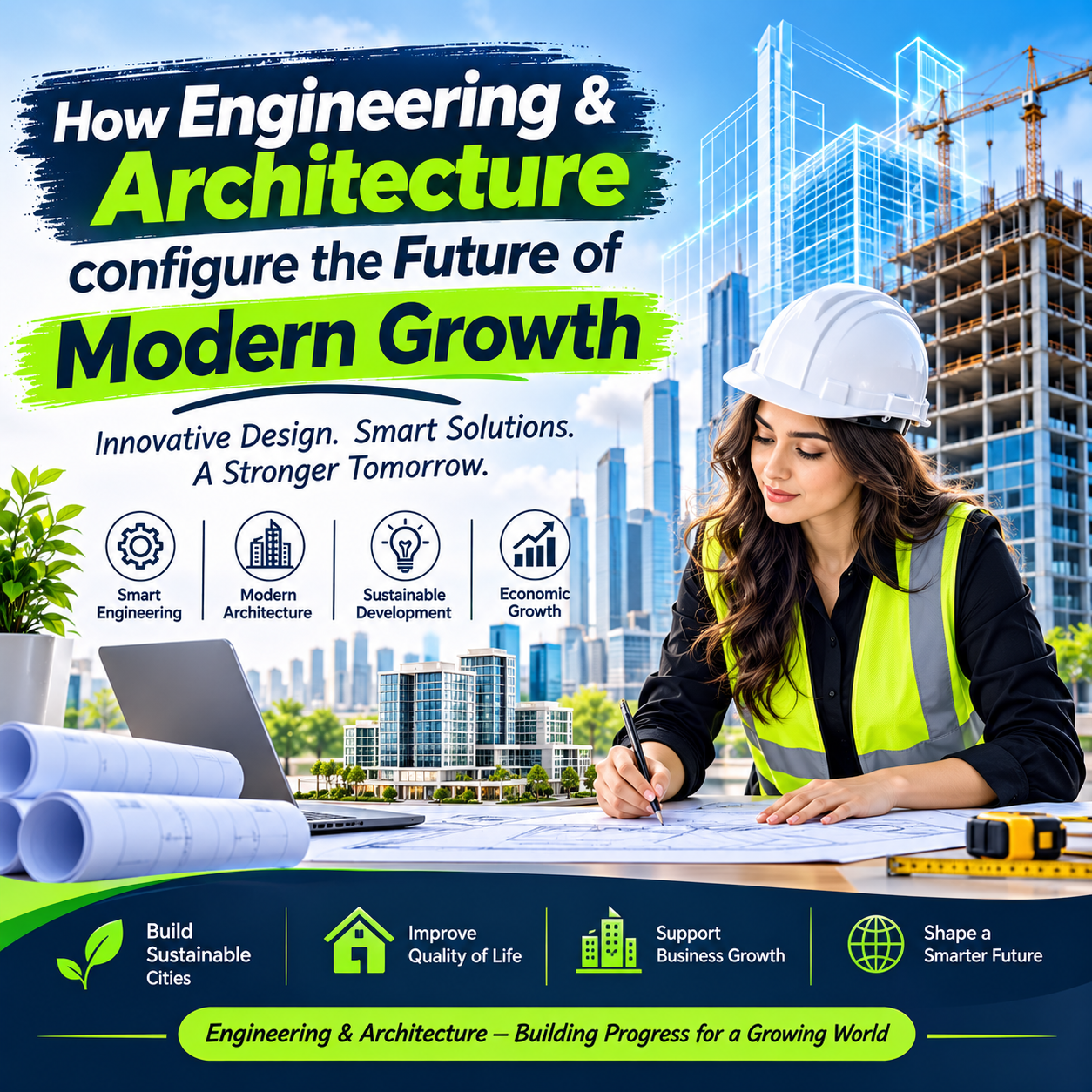
How Engineering & Architecture configure the Future of Modern Growth
Have you ever wondered how modern buildings combine beautiful designs, advanced technology, and long-lasting structural strength? Are you looking to understand how the right engineering and architectural solutions can transform your development projects?
Engineering and architecture shape modern development by combining creative design, structural safety, innovative technology, and sustainable construction practices. Together, they create functional, efficient, and future-ready spaces.
In this blog, we will explore five important ways engineering and architecture influence modern development, including innovative design, structural strength, resource efficiency, advanced technology, and customized project solutions.
1. Creative Architectural Design With Practical Functionality
Modern architecture is not just about creating attractive buildings. It focuses on designing spaces that improve comfort, functionality, accessibility, and everyday experiences.
Professional architects transform ideas into practical designs that match the client's vision, budget, and requirements.
Key elements of modern architectural design include:
- Space Planning: Organizing interior and exterior spaces for maximum usability.
- Visual Appeal: Creating attractive structures through modern styles and materials.
- Natural Lighting: Improving indoor environments with natural light and ventilation.
- Functional Layouts: Designing spaces that support everyday activities.
- Accessibility: Making buildings comfortable and accessible for different users.
For example, modern residential architecture combines open floor plans, energy-efficient windows, and functional living areas to improve the overall experience.
The right architectural design solutions balance creativity with practical requirements, making every space more valuable and comfortable.
2. Structural Engineering for Safety and Durability
A visually appealing building must also be safe, stable, and capable of handling real-world conditions. This is where organizational engineering becomes vital.
Structural engineers evaluate building designs to ensure that every component can withstand expected loads, environmental conditions, and other structural challenges.
Their responsibilities include:
- Load Analysis: Calculating expired loads, live loads, and environmental loads.
- Material Selection: Choosing suitable concrete, steel, timber, and other materials.
- Foundation Design: Developing stable foundations according to soil conditions.
- Structural Analysis: Assess strength, solidity, and building production.
- Safety Compliance: Following applicable building codes and engineering standards.
For instance, high-rise buildings require detailed structural calculations to manage wind pressure, building movement, and vertical loads.
Architecture and organizational engineering work together to secure that creative ideas become safe and good structures.
3. Sustainable Construction and Efficient Resource Management
Sustainability has become a major priority in modern development. Construction projects increasingly focus on reducing environmental impact while improving long-term building performance.
Sustainable architecture and engineering help project owners make smarter decisions about materials, energy, water, and construction methods.
Some important sustainable practices include:
- Using energy-efficient lighting and ventilation systems.
- Selecting durable and environmentally responsible materials.
- Reducing construction waste through accurate planning.
- Incorporating solar energy and renewable power solutions.
- Better insulation to decrease heating and cooling needs.
- Designing buildings that use natural light and ventilation.
Benefits of Sustainable Construction
| Sustainable Practice | Main Benefit |
| Energy-efficient systems | Lower energy consumption |
| Recycled materials | Reduced material waste |
| Solar energy integration | Greater renewable energy use |
| Smart insulation | Improved indoor comfort |
| Water-efficient systems | Reduced water consumption |
These strategies can improve building efficiency and reduce operating costs over time.
By integrating green building design and resource-efficient engineering, professionals can develop projects that support both environmental responsibility and long-term value.
4. Advanced Technology in Modern Engineering and Architecture
Technology has significantly transformed how construction and development projects are planned, designed, and executed.
Modern professionals use digital tools to improve design accuracy, visualize projects, identify potential issues, and coordinate different teams.
Essential Technologies Used in the Industry
Modern engineering and architecture rely on advanced digital tools and software to improve design accuracy, streamline workflows, reduce errors, and make construction projects more efficient.
1. Building Information Modeling (BIM)
BIM allows architects and engineers to create detailed digital representations of buildings. It supports better coordination, design visualization, and project management.
2. Computer-Aided Design (CAD)
CAD software helps professionals prepare accurate technical drawings, floor plans, elevations, and engineering designs.
3. 3D Modeling and Visualization
Three-dimensional modeling helps clients understand how a proposed building or structure will look before construction begins.
4. Structural Simulation Software
Simulation tools help engineers evaluate structural performance under different design conditions.
5. Project Management Technology
Digital project management tools improve communication, scheduling, documentation, and coordination between construction teams.
Popular Software Used by Professionals
| Software | Common Application |
| AutoCAD | Technical drawings and drafting |
| Revit | BIM and architectural modeling |
| SketchUp | 3D architectural visualization |
| SolidWorks | Mechanical design and 3D modeling |
| ETABS | Structural analysis and design |
| STAAD.Pro | Structural engineering analysis |
These technologies help reduce design errors, improve collaboration, and support more efficient project execution.
5. Customized Engineering and Architectural Solutions
Every development project has different requirements. A residential building, commercial office, industrial facility, and renovation project cannot follow exactly the same design approach.
Customized engineering and architecture services help clients receive solutions that match their project goals, available space, budget, and functional requirements.
Professional architects and engineers consider several factors before developing a customized solution:
- Project Requirements: Understanding the purpose and expected use of the structure.
- Budget Planning: Selecting suitable materials and design approaches.
- Space Optimization: Making the best use of available space.
- Design Preferences: Aligning the project with the client's preferred style.
- Technical Requirements: Ensuring structural performance and regulatory compliance.
Freelance professionals also provide flexible access to specialized expertise. Businesses can hire experienced designers, CAD specialists, BIM modelers, and structural engineers according to their project needs.
This approach can help organizations manage workloads, access technical skills, and avoid the expense of maintaining a large permanent design team.
How Engineering and Architecture Work Together
Engineering and architecture are interconnected disciplines. Successful development requires continuous coordination between creative planning and technical execution.
The following process illustrates how both fields contribute to a modern construction project:
Modern Development Process
- Client Requirements: Identify project goals, budget, and expectations.
- Architectural Planning: Develop concepts, layouts, and visual designs.
- Engineering Analysis: Evaluate structural requirements, materials, and safety.
- Digital Modeling: Prepare technical drawings and 3D models.
- Project Execution: Coordinate construction activities and technical teams.
- Final Inspection: Review quality, safety, and project requirements.
When these stages are properly coordinated, projects can achieve better functionality, improved accuracy, and more reliable outcomes.
Future Trends in Engineering and Architecture
The future of modern development will continue to evolve as new technologies, environmental priorities, and construction methods become more widely adopted.
Some important trends include:
- Smart Buildings: Automated systems that improve comfort, security, and energy management.
- Artificial Intelligence (AI): Supporting design exploration, planning, and project analysis.
- Sustainable Materials: Greater attention to low-impact and resource-efficient construction materials.
- Modular Construction: Manufacturing building components in controlled environments for on-site assembly.
- Digital Twins: Using digital representations to monitor and understand building performance.
- Green Architecture: Designing structures that use energy and natural resources more efficiently.
These developments will create new opportunities for architects, engineers, construction companies, and specialized freelance professionals.
Why Skilled Engineering and Architecture Professionals Matter
Choosing qualified professionals is essential for achieving successful development outcomes.
Experienced architects and engineers bring technical knowledge, creative thinking, and problem-solving abilities to every stage of a project.
Their expertise helps clients:
- Improve design quality and project functionality.
- Make informed material and construction decisions.
- Identify potential design and structural issues.
- Coordinate technical drawings and project documentation.
- Follow relevant building codes and safety requirements.
- Develop more efficient and sustainable solutions.
Whether a project involves a small residential property or a large commercial development, professional expertise plays an important role in achieving dependable results.
Final Thoughts
Engineering and architecture play a vital role in modern development by transforming creative ideas into safe, functional, and sustainable structures. Through innovative designs, advanced technology, and efficient construction methods, they improve the way people live and work. By working with skilled professionals, businesses and developers can create durable, attractive, and future-ready spaces that meet modern needs.
FAQ’s
Q1. Why are engineering and architecture important in modern development?
Engineering and architecture combine creative planning with technical expertise to develop safe, functional, durable, and visually appealing structures.
Q2. What is the difference between architecture and engineering?
Architecture primarily focuses on building design, space planning, aesthetics, and functionality. Engineering focuses on structural performance, technical systems, materials, and safety.
Q3. How does technology improve modern architecture and engineering?
Technologies such as BIM, CAD, 3D modeling, and simulation software improve design accuracy, project coordination, visualization, and planning.
Q4. What is sustainable architecture?
Sustainable architecture focuses on reducing environmental impact through energy-efficient designs, responsible material selection, improved insulation, and efficient resource management.
Q5. Can freelance engineers and architects support construction projects?
Yes. Freelance professionals can provide specialized services such as architectural drawings, 3D modeling, CAD drafting, BIM coordination, and structural design, depending on their qualifications and project requirements.